

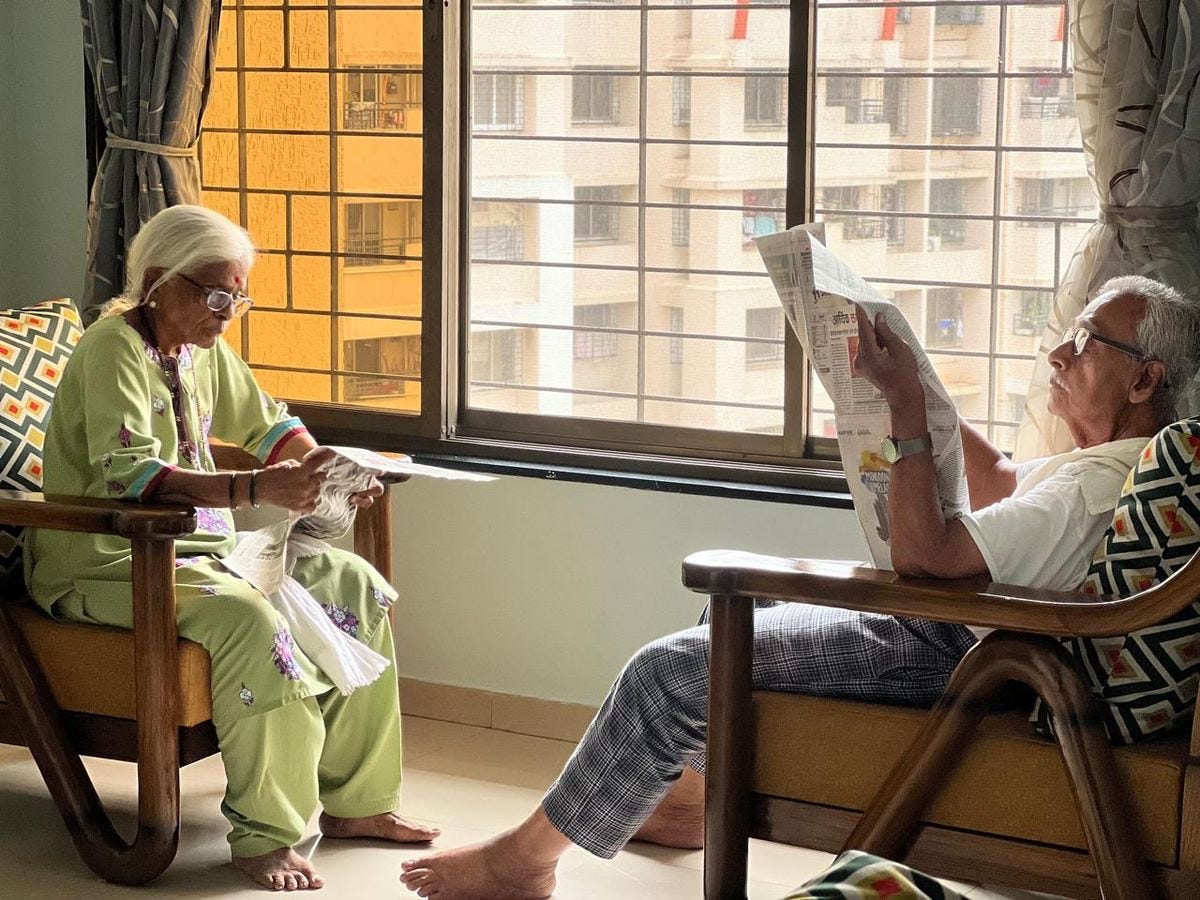
Have you ever made fun of your parents for their pronunciation?
It’s surprisingly common in many Indian households.
I did too, until I realized I was wrong.
When I moved to London to study English Literature, I found myself in a seminar filled mostly with native English speakers. During a discussion, I confidently used the word synecdoche, except I pronounced it incorrectly.
The room was filled with funny looks. At that moment, I felt deeply embarrassed. I replayed the moment in my head long after the seminar ended, wondering whether everyone had dismissed what I said simply because of how I said it.
Later, I shared the experience with one of my professors. What she told me completely changed my perspective.
She said that when someone mispronounces a word, it often means they learned it through reading rather than hearing it spoken. In other words, they encountered an unfamiliar word, understood its meaning, and were brave enough to use it in conversation.
That realization made me think about all the people we so casually mock for “saying it wrong.” We often assume that pronunciation is a measure of intelligence or education, when in reality it can be evidence of the exact opposite. It often reveals someone who has been reading beyond their comfort zone, expanding their vocabulary independently, and taking the risk of using a new word in conversation.
It also made me question the very idea of “correct pronunciation.” English is spoken by billions of people across the world, the vast majority of whom are not native speakers. Yet we continue to treat one or two accents as the gold standard, as though every other way of speaking is somehow inferior.
The idea of a single “correct” pronunciation is, to a large extent, a colonial inheritance. During the British Empire, Received Pronunciation became associated with education and prestige while local accents and ways of speaking were often dismissed as improper or uncivilized. Those attitudes travelled across colonies and continue to shape how many of us think about English today. Long after colonial rule ended, many of us still unconsciously equate sounding British or American with sounding educated.
But language has never belonged to one country or one accent. English itself is a global language that has evolved through countless cultures, dialects, and communities. Pronunciation varies across regions, countries, and even cities. Difference is not deficiency.
Mispronunciation is often a sign of learning, curiosity, and linguistic growth.
Without taking those risks, our vocabulary would remain limited, and our ability to express ourselves would never expand. Every fluent speaker has stumbled over unfamiliar words at some point. The only reason some people never mispronounce difficult words is because they never attempt to use them in the first place.
So when we mock someone for mispronouncing a word, we may be doing more than correcting them, we may be discouraging their curiosity and confidence to learn. We create an environment where people choose silence over the possibility of embarrassment, and that is far more damaging than saying a word imperfectly.
The next time you’re tempted to laugh at someone’s pronunciation, remember: every mispronounced word is evidence that someone is trying to grow.
Before changing someone’s pronunciation, consider changing your mindset.
The internet has thoroughly normalized turning brown parents into flat, algorithmic caricatures for quick views, this is the perfect antidote to that trend. Love the framing as 'quirks' not as punchlines, but as the literal language of security and trauma management. Beautifully epxressed the privilege inherent in judging a generation that had to prioritize stability over emotional vocabulary. Loved your perspective 🤌🏻
Could be unrelated but I completely agree. I recently studied English phonology, morphology, and syntax as part of my coursework, and one thing it really highlights is that Indian English has its own distinct linguistic features. Naturally, pronunciation can vary depending on a person’s first language, accent, and region.
Instead of mocking or trolling someone for their pronunciation, we should politely correct them if needed. Language is about communication, not perfection, and kindness goes a long way.🫶🏻