

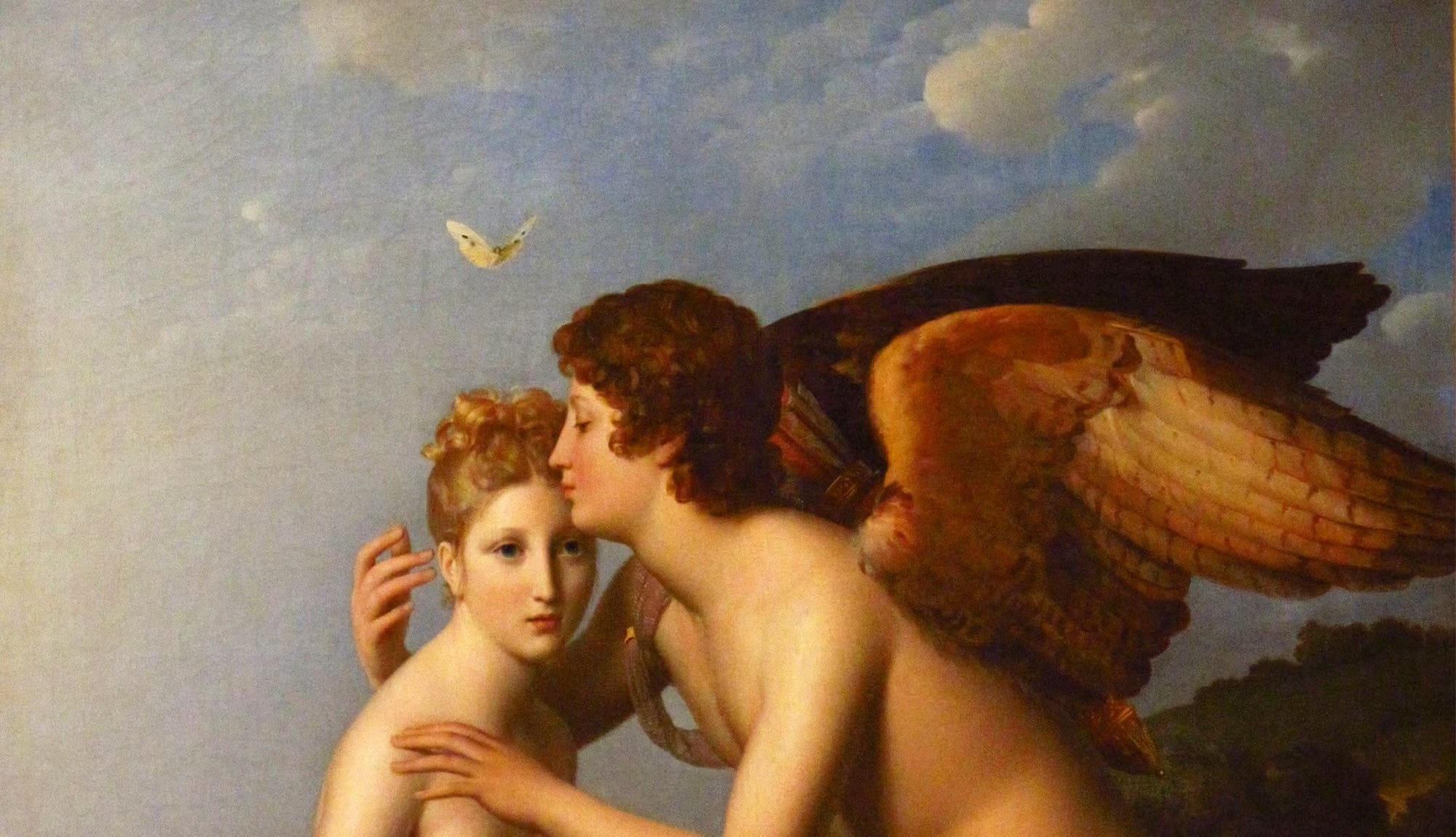
I asked ten people in an online poll to define love, and I got ten different responses:
Unconditional
Choice
Home
Pure
Comfort
Peace
Ineffable
Compromise
Irrationality
Infinite
No two answers are the same. How strange!
We can debate the definitions endlessly, but maybe this is one such word we will always fail to describe.
It is one that can never arrive at a universal meaning. Yet, across time, continents, religions, and languages, Love remains one of the few things almost everyone agrees is worth having.
How can something so universally desired be so impossible to define?
I presume our understanding of words has been set in stone, but definitions of Love have been like water. They take new forms. Sometimes they harden, sometimes they flow, and sometimes they evaporate into thin air.
Similar to my water example, philosophers have always taken the liberty to define Love in abstractions, metaphors, and stories, as associations to Love seem to derive a better understanding of the word. It resides less in a noun and more in actions, acts, and processes.
Love & its Philosophical forms
Did you know that about 2,400 years ago, Plato hosted a drinking party with his scholar friends to discuss eros (romantic love), documenting the discourse in the text Symposium? Greek priestess Diomata brought in the theory of ‘scala amoris,’ the ladder of love. She outlines this ladder as an ascent that begins with attraction to a single beautiful body. An individual rises a rung as they gradually start to love all beautiful bodies, then to beautiful souls, then to institutions and knowledge. Reaching the top cap signifies that an individual has reached their final form: they are in Love with The Form of Beauty. They are in Love with the concept, such that sexual desire and materialistic love eventually dissolve into one’s longing toward philosophical understanding and wonder. It positions this Platonic Love more as a journey of self-discovery, enlightenment, and transformation from singular to universal.
Whereas on the other hand, Aristotle would believe Shah Rukh Khan when he said ‘Pyaar dosti hai’ (translation: Love is Friendship). In Nicomachean Ethics, he argued that the highest form of love (Philia) is friendship, which can be broken down into three properties:
Utility: Loving someone because they provide a practical benefit to you. These bonds are usually transactional and end when the usefulness or the ability to provide stops.
Pleasure: Loving someone because they provide you with a state of satisfaction, enjoyment, and happiness. These bonds also shift as an individual’s desires alter with time.
Virtue: Love that occurs between two people who are at par with their morality and virtue, and love one another for how they are fundamentally. This is also referred to as ‘True Love.’
Aristotle also put a lot of emphasis on topics considered very modern, such as self-love, as he believed one must treat oneself with care and affection in order to truly love a friend. The partner, in some sense, should be considered your ‘another self,’ as you must desire and safeguard their growth as well as their interests with the same purity and intensity as you do your own. The truest form of love, as per Aristotle, leads to the achievement of eudaimonia, collective human flourishing.
Centuries later, a much more Stoic form of Love emerged. Philosophers such as Epictetus and Marcus Aurelius believed that while one should indulge in love, one should not let it make one a slave to a force that blurs, tempts, and hinders one’s judgment or virtues. They give emphasis to the value of interdependence and expose the flaws of possession and dependence. What’s interesting is that they considered love as something that is loaned, something that is ephemeral. Stoic philosophical views of Love essentially are an antidote and counter to the excess Roman Love (Romantics) that drives, intoxicates, and infects lovers into their irrational selves.
Notice how all these philosophies are still unable to define love. They just attach adjectives like Platonic Love, True Love, Virtuous Love, and Romantic Love, similar to the people who answered my poll. None have been able to identify what love actually is, just its role in what it should do.
I try to consider Love as a star that emits small specks of light. Everyone has one, differently shaped, differently distanced, and differently bright. But in the grand scheme of the universe, together they form a connection, binding humanity into a sight of constellations.
“Centuries later, a much more Stoic form of Love emerged. Philosophers such as Epictetus and Marcus Aurelius believed that while one should indulge in love, one should not let it make one a slave to a force that blurs, tempts, and hinders one’s judgment or virtues.”
Yayyyy lit reference 😭🫶🏻
Almost makes me smile how love seems to resist being “defined”!