

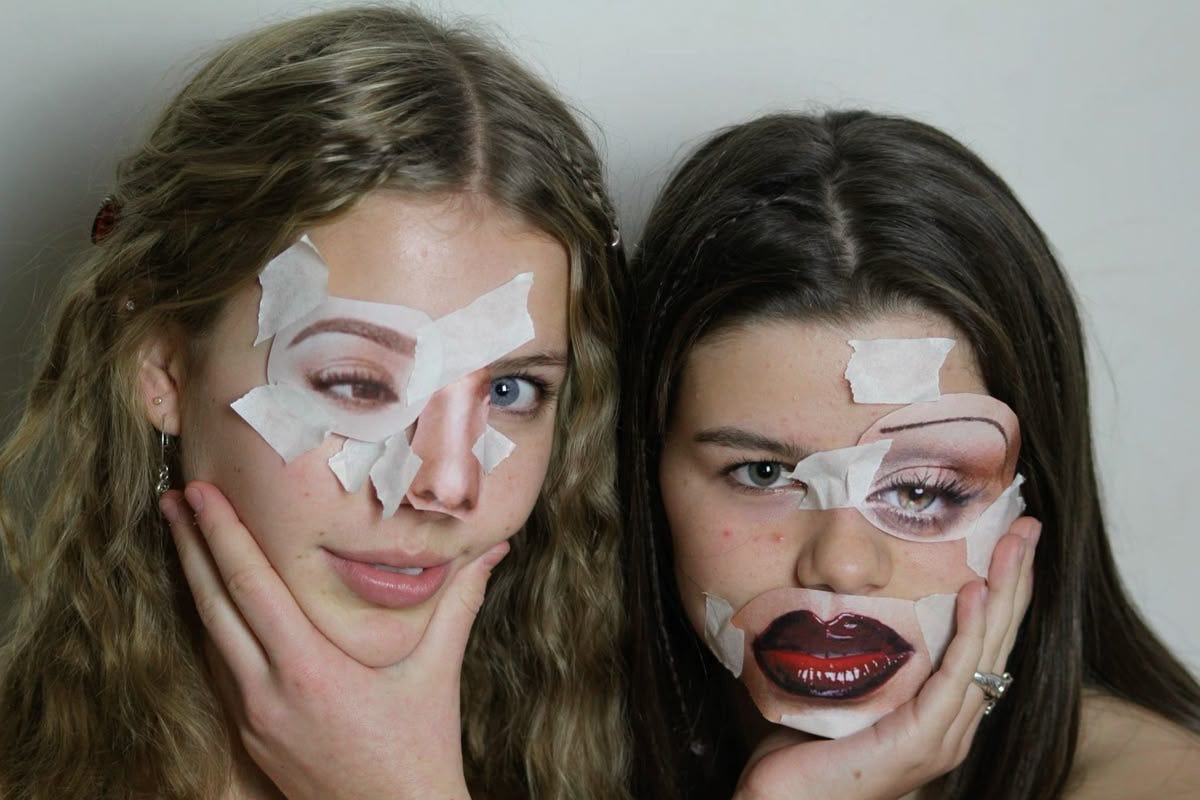
The fantasy of Peter Pan’s Neverland is that you never age. As a kid it fascinated me, to be swept into a place where I would always be a child. Run across the fields, never lose my milk teeth, and stay the same. I always thought that was why the concept of Neverland is so relevant: it’s essentially every kid’s utopia—to continue being a child. I wanted to stupidly cackle, play, and be carefree, and leave once I knew it was time.
Today, Neverland has changed. It has no children. Only a sea of adults trying to reverse the clock. The playgrounds have become clinics, fairy dust has become cosmetic procedures, and painted murals are adverts for anti-ageing cream. But not a single one is running down the hill, tucking flowers behind their ear, or grinning cheek to cheek.
An army of adults marches, demanding that Neverland is a scam, as they still have their fine lines popping, hair greying, and hands wrinkling. But that’s a misunderstanding.
Neverland was never a place that made them young. It was a place that gave them the opportunity to be youthful.
Where are all the kids? Where have they gone?
Most people say they left too early—left because continuing to be youthful meant they still appeared childish and naive. And that is apparently a bad thing. Children have always wanted to grow up. They wore their parents’ shoes, borrowed their mother’s lipstick, and imagined the day they would finally order a cappuccino at the coffee shop. But today, that longing has accelerated. Ten-year-olds have skincare routines that rival dermatologists’, twelve-year-olds debate collagen and retinol in their Sephora Halls, and “anti-ageing” has become a concern before ageing has even begun.
Neverland is seen as place that escapes age. Children leave it to look older. Adults horde in to maintain their youth. Both trade their vitality for vanity, to look like the aspirational age.
When did our measure of time equate with our measure of worth?
And why did we ever allow it to have a peak?
I think it’s time we view our time as constant, and perceive all of our time and all of our years as beautiful, worthy, and without a superficial peak to chase.
'Sephora Kids' and preventative Botox made me immediately think of a book by Naomi Wolf The Beauty Myth. Wolf famously argued that the beauty industry acts as a form of social control, redirecting energy toward impossible physical ideals just as they gain independence. Feel like this piece exposes a terrifying new frontier of that myth: it has been digitalised (accelerated by algos) and scaled down to trap kids early. Turning creative play into premature anti-aging correction is a dystopian shift. Really loved the piece!
Its funny how the beauty industry profits from both ends. It teaches children they're already late, and adults they're running out of time. Same insecurity, different packaging !!!