

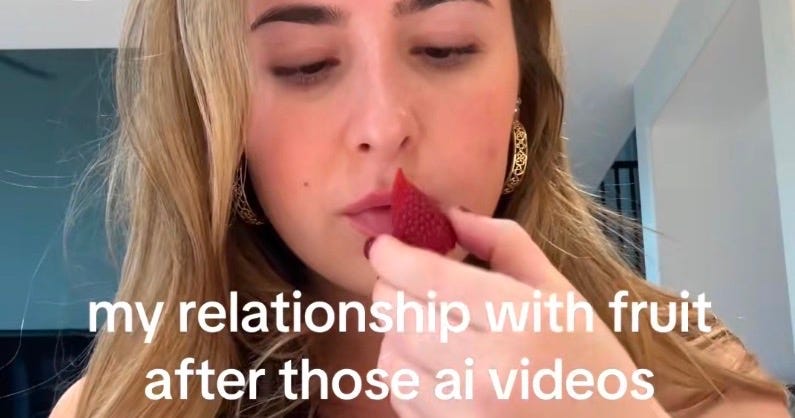
On the surface level, AI generated fruit videos as super silly and nonsensical. We see animated oranges fall in love, banana getting extremely ripped post break up (pun intended) and a rags to riches hustle storyline of a mango. But if you spend a few minutes scrolling, a very specific narrative arc emerges again and again as if all the videos are constructed from the same formulaic storyline.
A typical storyline goes like this:
Two fruit characters , a couple or married pair are presented as visually similar and unified: simple clothing, gentle body language, a soft, “good” aesthetic.
One partner (usually the woman) is tempted by an outsider which often a fruit character with exaggerated, sexualized features, tight or fetishized clothing, and a more authoritative or alluring presence.
The affair unfolds.
The result is pregnancy: the “cheater” gives birth to a cross‑breed fruit.
The faithful original partner is heartbroken, thrown out of the home or divorced.
The final scene often hints at revenge or retaliation. The classic “hook” for future content.
This storyline is not random fluff, and through the repeating pattern reveals something deeply unsettling about how AI constructs human drama when left to imitate patterns without understanding context.
Why is this narrative problematic? These fruit videos may be animated and abstract, but the narrative choices they replicate are far from innocent. As they perpetuate sickening stereotypes about gender, sexuality, morality, and interpersonal relationships.
By consistently portraying the woman as the one who is tempted and the outsider as a hyper‑sexualized female analogue, these videos echo the age‑old Madonna–Whore dichotomy: a term from feminist theory that describes how women are categorized as either pure and virtuous or sexually promiscuous and morally suspect.
Even when the characters are fruits, the symbolic structure reproduces this reductionist binary.
The normalisation of cheating: AI models trained on viral media learn that betrayal equals engagement. But turning infidelity into a predictable narrative punchline contributes to a moral desensitisation where cheating isn’t a complex human experience instead it’s a trope to be recreated for views.
This parallels what social scientists call moral simplification: the process by which complex social phenomena are turned into easily digestible but reductive moral narratives. That reduced the gravity of the incident, making it more socially accepting.
The pregnancy aspect of the narrative is the most telling. It brings in the idea of visual moralisation and the idea that wrongdoing must leave a visible trace. The child which is usually a mutating fruit (banana/ strawberry) combo brings in the idea of biological contamination. It frames it as a form of disgusting unnatural sin, but one the poses a certain intrigue.
Could it perpetuate harmful connotations regarding inter racial couples and mixed children? Is something to reflect upon.
But why does this pattern exist?
Because the online space rewards it!
They are easily understandable. They trigger strong emotions. They support the multiple parts/ sequel narrative techniques to boost engagement. However they also aid in solidifying certain biases:
Hyper sexualization of women
Normalisation of physical cheating
Drives negativity towards interracial relationships
These videos mirror how we already simplify love, blame, and desire into easy stereotypes. When even the most trivial stories default to cheating, punishment, and sexualized roles, it reveals how deeply these ideas are ingrained in our everyday culture. The problem isn’t the fruit, but how these caricatures of human relationships actually expose detrimental prejudices that prevail our society.
I always see these AI generated videos when doomscrolling and I always wondered why it is the same exact trope over and over again. They always seem to exaggerate expressions and names all in the efforts of being funny, whereas it’s so ironic how all these videos reflect serious narratives that wouldn’t be taken so lightly in real life. Nonetheless, the comedic elements that form the videos really brainwash the viewers subconsciously into normalising the lack of moral values and commitment in relationships. As with the other topics discussed in this incredibly well written article, these AI generated videos do not reflect any moral values and instead prioritise engagement over ethical responsibility.
I agree with you. The problem was always there but what is differnet nwo from ealrier. It is the normalisation of everything. As the article i read of your about alchol same there also. Poeple or ai video or movies, series and everything has normalised the bad aspects of society so much that no it doesn't surprise you.
Your artcles are really good.To muuch life refelcting and self calculating ones.